Showing posts with label Inspiration. Show all posts

April 3, 2018

Inspired by Instagram

Instagram has become important to me. Not only do I keep in touch with friends, family, clients and colleagues, I have been able to create a virtual online gallery of things that inspire me. I follow brands whose product or advertising I like, I follow people who are passionate about food, I follow artists, galleries and even malls that have compelling imagery. So I peek at it a few times a day and get inspired by what is out there. One thing that I have been drawn to are the fantastic, layered breakfast bowls that are so prevalent (at least on my feed.) The colors and textures just make eating breakfast look fun, and as someone who tends to not always have the time for breakfast, this is big. So, inspired by the playfulness, the beauty and the natural healthiness of these bowls, we decided to create a few fun ones.


March 6, 2018

Thought Provoker-Riley Johndonnell

FINDING PURPOSE, COLLABORATION, COLLECTIVE SPIRIT, OPTIMISM AND CREATING TOOLS TO ALLOW PEOPLE AND BRANDS TO FIND THESE THINGS


When I first laid my eyes on an issue of Surface Magazine, I was blown away by the innovation, the graphic design, the photography, the styling and the content in general. I only wished I could be a part of such a project. I sent the magazine a promo card (this was when I had just opened my studio) and didn’t let myself even hope. I was thrilled when I heard back from them, not only from them, but from one of the publishers, Riley Johndonnell. Turns out Riley was not just a co- publisher, but founder, creative director, designer, editor, stylist, writer, publicist. There was nothing that he didn’t do. During my first meeting with him, he explained why he responded to the images that I sent him, images which later got into the coveted CA photo annual. Coming from years of studying art at RISD and Chicago Art Institute and growing up with my Creative Director father, I was used to hearing creative commentary, but Riley was different. The things that came out of his mouth seemed new, exciting and ahead of his time. I was hooked. I needed to work with such a creative no matter what. I snapped up every assignment that Riley threw at me, I jumped at the chance to be on staff at the magazine, to get a view of how they created content and how they promoted the magazine. From the beginning, the magazine was aligning itself with high end brands and causes. They threw the most dazzling events that promoted not only the magazine and the brands that supported it, but the causes they cared about. All the while having a blast and working insanely hard 24/7. 

One of the causes that Riley felt strongly about was supporting up and coming talent. He launched a yearly issue entitled “The Avant-Gaurdian” showcasing edgy new talent and had launch parties in major cities where big brands could align themselves with the visual “elite”. It drew attention from major fashion brands and launched the careers for a number of those photographers. As much as he gave to the magazine, he gave to the people that contributed. He inspired through his passion but also his support of the talent he recruited. 

After he moved on from the magazine, he was pivotal in creating what was to be known as the Surface Hotel, a hotel that partnered with brands to create inspiring, cutting edge hospitality in the up an coming LES neighborhood of New York. It later came to be known at The Rivington.

From his expert branding work with Surface, Riley moved into work that was more civic minded. He rolled his tremendous following into social media success for events that promoted such causes as gay rights and sexuality to his current project/ movement UMEWE ( you, me, we) INTO YELLOW- promoting/ teaching optimism in public events throughout the country. His efforts are in part meant to bring awareness to the epidemic of depression our country faces and seeks to show people how to see themselves as part of a larger whole and thus work and think collaboratively rather than so much about I and me. He consulted with Wework early on on this idea. He has partnered with Pantone to create a certain color of yellow that promotes positivism.  The NY Times recently covered a story about Yale’s most popular class being one teaching optimism. Riley has his finger on the pulse. That is why I look to him to hear what he is up to to be inspired, to tell him what I am up to and hear his thoughts. Riley is a good friend and a mentor, one who continues to bubble up ideas a mile a minute that are well ahead of their time. I asked Riley some questions about his story, his path, what inspires him, how he creates and what he looks for in a photographer, writer, and stylist.  His comments formed more of a story of sorts.


In college, Riley was studying fine art and art history but quickly became interested in crisis PR. Along with his interest in art and design, he realized that he was a social activist deeply concerned with equality issues. He focused on learning how to do “INFORMED ART DIRECTION”. He wanted to inspire innovation in innovated ways.  Despite not much exposure to magazines, he became interested in creating a magazine as an art medium (he believed that the message is in the medium and wanted to explore it's boundaries), bringing conceptual art and fine art to this mass medium (even though magazines typically focused on making money). A little like what Andy Warhol did with Interview magazine. He felt that a magazine could be the bridge between art and commerce. Riley discovered a magazine that was tailored to the transvestite community called Surface. He thought the name was appropriate for the message he wanted the magazine to have and re launched it as a fashion, design and automotive magazine. 

Riley wanted the magazine to talk about style, but style as democratic form of social currency, not just fashion that you can just buy. During his time as publisher, editor and creative director/ designer of Surface, Riley focused on making it a tool to inspire people, rather than the money making “aspire” verb, which he felt magazines used to get people to want material things that they might never be able to acquire. Making the magazine a tool (which is something that he still does today) for others to have to create, gain exposure and be heard. That was why he launched the Avant- Gaurdian concept, assigning fashion shoots to young, unknown photographers and getting big fashion houses to lend them clothing for their shoots, taking a huge risk on these unknowns. Riley felt it was important to give exposure to the young artists, to give them a chance to be heard. When he felt that the magazine was becoming too much about aspiration and material desire, rather than inspiring ideas and collaborations, Riley decided to move on to other things. At that time he felt that the future in magazines was going to be about readers creating their own content- and the magazine being a true collective and form of collaborationAt the time, Surface wasn’t ready for these ideas. Soon however blogs and social media emerged which were exactly what Riley had been talking about- reader driven content. Now there are “influencers” rather than editors. These influencers are even curating content that other people are making- more of the collective collaboration idea. 

When I ask Riley what he searches for in artists and writers to hire or work with, he segways into the idea of synchronicity. When he comes across work or others come across his work, and both seem to align then it is a good match for collaboration.  He feels that branding is somewhat over, that no idea should be own-able by one entity, that things are moving towards people with positive intentions collaborating to make an impact. He notes that the only way to solve problems is though collaboration and that optimism is an underlying drive that we are already engaged with. He adds "it isn’t just about aesthetics anymore but purpose and meaning. "

Below is some of Riley's award winning work for Surface Magazine, as well as some of his branding projects with clients such as Lexus, Mini Cooper, European Trade Commission, Levis, Vueve Clicquot and Lafitte Restaurant (a collaboration that I was part of) as well as some of his automative work, product design (sinks) and trend forecasting work. 


February 12, 2018

Artist Inspirations- Chantal Joffe at Victoria Miro Gallery in London

I find it important to continuously expose myself to ideas, whether it be about business, marketing, parenting or politics. Of course I find ideas about art the most interesting because they take all these things and make it visual, relatable. I was recently reading about the artist Peter Doig, whose work I have come to really admire for it's sense of allegory and courting risk, how it walks the line between repulsion and attraction. Reading about his work, led me to look up the London gallery Victoria Miro.  This galleries seems to show a good example of really good contemporary art. I fell in love with the work of painter- Chantal Joffee. Please check out the links and view her outstanding portraits.  I also loved watching the video of her talking about her recent project for the London Tube station Whitecastle.


"Chantal Joffe brings a combination of insight and integrity, as well as psychological and emotional force, to the genre of figurative art.  Her paintings alert us to how appearances are carefully constructed and codified, whether in a fashion magazine or the family album, and to the choreography of display. "


September 16, 2014

Shooting a Cookbook

One of my favorite kind of projects is to shoot a cookbook. Shooting a cookbook means that for an extended period of time- one week, two weeks... you get to sink your teeth into a subject. So far I have had the delicious opportunity to shoot books on subjects as diverse as BBQ, ice cream, baking, kids baking and cooking, pickling, Japanese cooking, Chinese cooking, Vietnamese cooking, Irish cooking, infusing alcohol, tea, olives, apples, bread, vanilla, marshmallows, cooking with all parts of the animal, including FAT... well, perhaps I will stop there. All have been great fun, hard work and learning a lot about each subject. The icing on the cake is getting the opportunity to meet and sometimes work with the author. At the beginning of this year I worked on a book that offered me the chance to work for the second time with a legend in the baking world. Working with the author Alice Medrich I have learned to appreciate the subtlety of ingredient flavors complementing each other. I saw how a chef with a refined palatte can balance this so well. I try to do that justice in my photographs. I always have to be careful about how much I say about my projects so I need to leave it at that. I will disclose more when it is published by Artisan later this year.


May 26, 2014

Feeling Human

When you create art, you must reflect on it. Thinking about what it is to be an artist occupies a lot of time. My teachers along the way have made it clear that as an artist you have to be willing to share your humanity. To not be afraid to reveal yourself in some way. If you are to reveal something true about yourself you need to know who you are and your weaknesses- your humanity. Every year on May 26th I feel my humanity, my loss, my sacrifice, my pain. It may seem sappy- get over it- move on. This is the day I lost my mother to breast cancer four years ago. Each year this day rolls around I remember the pain of losing her. It makes me human, it makes me feel weak. It makes me understand loss. It makes me feel human. I share her poems on this day because in them she is not afraid to show her humanness though her observations of simple moments. Her poetry not only reveals something new about her every time I read them, but they make me look more carefully at the life around me. Each thing gurgling up a new truth. Sharing her poetry lets me keep her alive and show others what a beautiful mind she had.  I am not posting a photo for this entry as the poem conjured up it's own image.


Animal Uncertainty
  
Spotted at the edge of a clearing, the doe
freezes and in that moment of hesitation,
carelessly exposes a brown flank
with all the insouciance of a woman undressing.

She lifts a delicate hoof and then
reurns it to the snow with all the grace
of someone who was born to run. Once, long ago,
I watched and elephant near Madison Square Garden

being coaxed up onto a ramp. He carefully
placed his giant foot down, then stepped slowly back,
remembering, perhaps, a former collapse.
The elephant knows his great weight in the world,

how the earth opens up, sometimes without warning.
So much of our lives, we spend paralyzed
by indecision, or excessive ambition.
On good days, we go forward...

And sometimes, that elephant's look comes back,
that great moving mountain of animal sorrows
in moonlight in Manhattan. And that memory of that
midnight scene, that exquisite moment of

an elephant remembering.

  © June Beisch Here is a link to a video of her last reading- only 3 months before she passed away.
June Beisch Reading

May 26, 2013

Thought Provokers, In Memoriam: June Beisch, Poet


Three years ago on this day at 9:45 in the morning, breast cancer took my mother. She lived an inspiring life filled with poetry, introspection, passion and discovery. She was one of the true artistic souls that has inspired me in my life. Today I remember her through her poetry. I include one of my personal photographs where I endeavor to create a similiar experience as her poems do- one that transcends the specific and reaches to an experience of a moment that all can relate to.


“Skunks’’

This morning, I stepped out
onto the deck
and into the cold, sharp
morning air
and the cold sharp scent
of a skunk
lurking nearby, close
enough to remind me
that some are up early
sorting through life’s detritus,
hoping to uncover
its purpose or meaning,
some are reconnoitering,
hoping to discover
just who is the enemy, who the friend.
Last night, I sat reading poems
from a new anthology
and after a while, I put the book down,
lowered my head, my heart
aching. I was filled
with the most delicious
sadness. I was no longer in the
everyday, ordinary world but
was transported to the one of
beauty and of sorrow
and I saw then
how much we need sadness
and how sometimes, reading poetry,
you come upon a sudden
sharp whiff of truth and it
enters your life, it hurts you,
and it can even
set you free


Lobster


On first seeing it, I was repelled
by the idea of eating something so
exotic looking and sinister,

having read Jean Paul Sartre's line 
about crustaceans having a dubious
consciousness. But I was in New York, and 

the young man I had met there tucked
my napkin under my chin and
handed me a nutcracker for the shell.

I was from Minnesota, raised on
lakes and brook trout. I, too, was
uncooked and formless, like the creatures

who take on the shape of their environment
My first taste was delicious, but the
third was even better and by

that time I was a real New York girl
who wore skinny black dresses and false eyelashes,
able to handle myself with any

crustacean, dubious consciousness or not.


This was part of the article that the Boston Globe wrote about her after her passing:


Having survived cancer for 30 years, she wrote poems that looked beyond the end of her own life. Poets, Mrs. Beisch wrote, seek “the dangerous places of the heart,’’ those spaces where on a snowy night in Cambridge:
you keep on writing your poems and some
are melting into nothingness and some
are sticking and holding on, reaching someone
making that small human contact and
then, in that world so full of endless dark,
the world becomes so white you think
that even you might leave a mark.


January 24, 2013

John Baldessari

I was never a huge fan of Baldessari's until now. I have been looking at art on Artspace.com and reading about the artists. For some reason this format of viewing art is interesting to me. Anyway I like his ideas alot. They are rather Dada-ist- brought up to date (add color!) I think that even in the comercial world we are making art that impacts the public- sometimes on a broader scale than in the fine art world. When I am doing my commercial work I like to bear in mind the ideas behind alot of great art of our time.

January 7, 2013

New Year's Resolution

Steve Jobs said "you have to work hard to get your thinking clean and make it simple."

This quote is from a book that I am reading entitled "Antifragile-Things That Gain from Disorder." The author, Nicholas Taleb uses this quote from Jobs as a way of supporting his theory that we need to get back to a more "simple and natural" system, and away from the manufactured, over predicted one that we have. He argues that the more we try to predict things, trying to control their outcome by manufacturing reality, the more fragile we become. And when the unpredictable occurs (and it always does) those systems that are fragile will not survive. He is a proponent of the "Antifragile" as he puts it- a system that doesn't try to predict, but is prepared to not just survive any shock that comes along (anything from a financial crisis to an earthquake), but actually gains strength from it. He states that Nature is Antifragile- it has weathered so many assaults and shocks and still persists. He proposes to let the simple and natural take their course. I have always been an advocate of the simple and natural. Systematically I use it as part of my personal philosophy and in my business.

So I guess my New Year's resolution is to stay strong to that conviction. Keep things organic, flowing, simple and natural.


Ingredient and recipe shots for Paleo Cookbook by Elana Amsterdam/ Ten Speed Press

December 6, 2012

Thought Provokers: Folks Who Have Inspired Me: Chuck Beisch


Dad at McCann in London in the 70's

I think the most interesting thing to learn about another artist is to find out what other creative has inspired them in their development. Then you can start to see how the puzzle of how they work is put together. It fuels your own fire a bit, I believe. So here I start an ongoing series- introducing some of the creative folks who have shaped my vision, my soul. I feel lucky- I have had the opportunity to work with some amazingly talented creatives and I admit- I have been influenced by many of them. The folks I introduce here are a few- some who I consider almost family because of how we connect to each other creatively. The first is real family- my father- Chuck Beisch. He is the person who introduced me to photography, who has encouraged me through my whole career, and the first to get me to look carefully and really see.

Dad was a Creative Director in NY back in the 50's and 60's- so I guess that classifies him as a "Mad Men". He worked with photographers like Irving Penn, Diane Arbus, Avedon, Hiro and became friends with Bruce Davidson and Joel Meyerwitz. Photography was his passion along with art directing. He went on to work in London, San Francisco and Boston. He won so many Hatch awards my parents started using those silver bowls as ash trays. He has taught creative thinking and strategy at Boston University, Emerson College and RISD. After closing the doors to his Marketing agency a few years ago he now focuses on his own photography- winning many awards (I am proud of him!) I sent him a few questions to flush out his process as he is one of the most creative thinkers I know:

What led you down the road to being creative? What is your back story?

When it became clear that I was not cut out for a career in academia it became the only alternative. In addition what helped was the fact that I was born into a family where art was a tradition so nobody told me you couldn’t raise a family on what I earned with a career in creativity.

Where do you get your inspiration? Reading, traveling, music, relationships, looking at artwork?

Looking, looking, looking. I am constantly on the prowl for arresting images - innovative ideas.

What is your process for coming up with ideas, creative solutions?

I make it a point to know all I can about the problem at hand, then let the stuff germinate after which I scrawl down any ideas that come off the top of my mind - I do not reject anything. Then I put the stuff on hold and look at it again in a day or two. What floats to the top I skim off and try to develop. I reject the obvious and look for the unique solution. Right now I am doing a lot of photography for myself - I was taken by what Donald Judd the minimalist painter said to his students "Don’t ask yourself if it is art (there are too many prerequisites in that ) ask yourself if it is interesting". That works for advertising or any mass media for that matter.

How do you/did you choose who to hire or collaborate with (other art directors or photographers)?

Madison Ave in the 60’s was like the wild west. Creativity ruled the land and you could bring in anyone - sometimes the selling of the work was attached to the photographer /artist /illustrator director/ composer who was to do the execution. I brought in Diane Arbus for instance to work on dog food. Also Avedon, Bruce Davidson and Hiro to work on a bank campaign. Joel Meyerowitz did my storyboards. Nicholas Roeg was to shoot a Gillette commercial for me in the UK. We were encouraged to think out of the box. An interesting story revolves around an art director friend who hired a photographer who was known for his humor and photographing people to shoot a photo for an ad which had a fun approach to selling a motor scooter.

Do you find that listening to music is important in the creative process?

It connects with my inner self. Takes me to another place. Music in commercials is critical. I used the anvil chorus as background for a spot that talked about the frustrations of using a computer.

What do you listen to for inspiration?

Classical, Cool Jazz. Sometimes the lyrics of Dylan and Cohen.

Do you find it important to have conversations, relationships with other creatives? 

Yes especially if they push the envelope- but I have worked alone writing copy and doing the art direction. I have worked with great writers like Ed McCabe. I steal from the experience - not the words but the thinking and the style.

What would you say is the most important way to connect with the creative community? 

To win awards. But what is more pertinent here is how to connect with the person who is working with you.  In that case to share your enthusiasm for the product or service no matter what you may think of it. Being cool is being cold. It’s creative constipation. So accept everything that the other person offers = you can make the cut later.

What is the most important thing to your creative process? Your place, the people around you, your technical know how?..... 

All of the above. But mostly the challenge - the fire you have in the belly.

Can you share a story that defines your creative “style” or how you like to art direct?

I was working with Hiro on a campaign that personified the New York woman. Hiro had done a studio shot of kids bouncing around on a sheet of plexi while Hiro shot from below. I suggested we use the same method on location shooting up past the model and using the buildings as backdrop. It won a Photographis award with the photograph. Also-while working in England I went to do a pickup shot for a commercial that featured women who had used a conditioner and shampoo. The director shot the pickup as it was boarded. Then, as we had the models on hand for the rest of the day, we shot the insert in an entirely different way not only for that segment but I also rewrote the words and the editor cut an entirely new spot. I showed the original spot with new insert then when the client knew he had what he asked for, I showed the new spot.   He walked away in a stupor but called me the next day euphoric. With this and the other ads we became #1 in the Shampoo category.


Can you share some images from your favorite project?


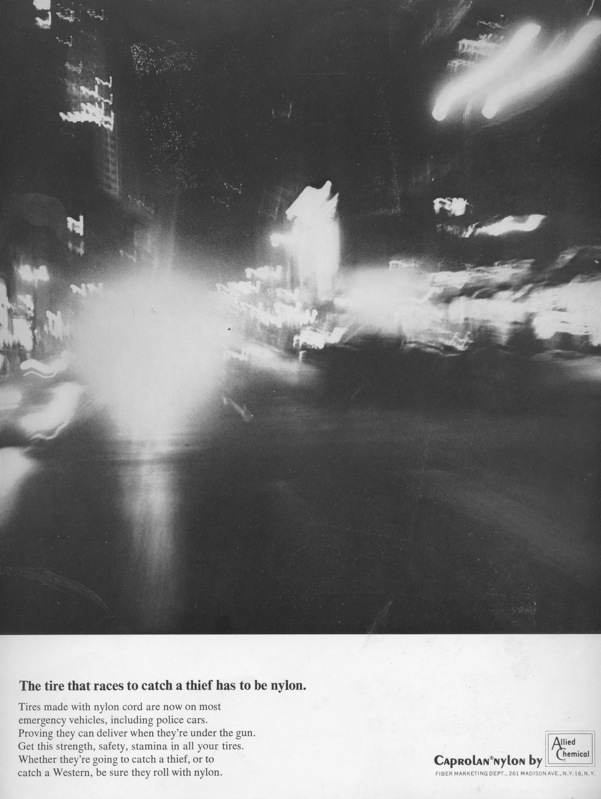
Photographer: Hiro- Campaign- Tires


Photographer: Hiro- Campaign- Tires


Please add anything else you would like or feel would be interesting.

Trust your instincts - and remember you are there because other people can’t come up with creative ideas - you are THE man /woman.

September 25, 2012

The Most Meaningful Photo of My Life was Shot with an iphone


The Most Meaningful photo of my life was shot with an iphone.

I have owned various cameras for over the years, starting in middle school with the Kodak Instamatic, then graduating to a Nikon F2 when entering the photography program at RISD and now an arsenal of various format cameras both film and digital to meet the needs of my professional assignments. For the past couple of years however, I have found myself intrigued with iphonography (to give it an official sounding name) ever since I captured one of the most meaningful shots of my life with my phone! 

Back in 2009, a few months before my mother passed away, I captured a photo of her and my daughter walking back from Church. I wouldn’t have thought to carry my camera to church, and honestly at that stage of her illness she was not all that open to having her photo taken – due to the wig and all. I happened to be walking in front of them on that rainy Sunday in Mill Valley, CA and turned around and saw them together- walking and chatting. I grabbed my phone and snapped the photo without them even knowing I was taking the photo. That photo later became an important one to many members of her family and friends because it truly captured her spirit, her strength, her beauty and her incredible connection that she had with my daughter. I was able to capture that brief moment unnoticed because of the camera phone. It is a camera that is not perceived as one so people act differently around it, they seem more relaxed, more like their true selves- not their “camera ready"self.

Up until then I didn’t think too much of taking photos with my phone, now I use it for personal snapshots, personal projects and most recently for an editorial project. I find the “phone” to be an incredibly immediate connection to capturing the moment, the feeling, and the energy of the scene without all the technical maneuvering that sometimes needs to occur with more complex cameras. For me it is like painting, a direct, immediate and satisfying way of making art. And I love that it puts the power to make great photos in the hands of everyone!

The power of capturing the world so effortlessly has in turn captured our attention. It has shifted how we communicate. We connect through images shared. Images of the real world, of real, raw moments that are most times unedited and un art directed. And yes, there are a lot of not so great images out there, but the power to create is infectious and with time the images get better and sometimes develop huge followings. Now they reserve seats at the US Open not just for the top sports photographers but also for the top instagrammers- ones who have hundreds and thousands of followers! 

When they called this the information age they had no idea how right they were. We have become impassioned with communicating with each other,  in bursts of words on twitter/facebook/texts and now bursts of color, light and pixels in the form of instagram/iphonography.

Also check out my instagram on http://instagrid.me/leighbeisch/

if you do make sure to scroll down to see some of my photos of Rome from a recent trip.  More to come on that!

October 3, 2011

Shadowplay

Walking back to my car after seeing the Picasso exhibit at the De Young Museum in Golden Gate Park, I was inspired by how the painter makes us look at things. The cubist notion of muliple perspectives making up the complete experience of a place or event. Combining this with an exercise the photographer Bruce Davidson once told my father about of walking around the same block in New York everyday and finding new things to photograph. Shadows were interesting me that day as the San Francisco sun was out and the light was crisp in a way you find nowhere else but by the ocean in Northern California. I found myself really looking and discovering a new perspective of the experience of my walk on that beautifully sunny day in the park.

September 27, 2011

Why is photography important?

This is an ongoing question about all art, but espcially important now that there are folks who claim "art is dead, photography is dying!" I am always interested in other people's/artist's ideas on art- it helps shape my ideas, sometimes it shows me a new way to look at art. Here is a good quote to chew on:

This was from an interview on "A Photo Editor" blog this morning with photographer and RISD (my alma mater) prof. Jesse Burke:

"Exactly. Why photography matters. What can you say with a photograph. Why is photography important?
Dude, you just opened it up. There it is. There’s my next question. Why is photography important?
We have this final project, it’s called “What’s important to you?” What I try to get across to them, when they leave my class, (beyond black and white analog skills for developing and printing film and a little bit of digital input) is understanding that the world is a dynamic and amazing place. Everybody’s story is important and that people care about each other’s stories. So what I try to stress is that what’s important to you is also important to me. I try to focus on having them figure out a way to share their personal interest, and things that are important to them, in a dynamic way to the world. Hopefully they’ll leave the class being a better architect, or a better language studies student because they can see how visual culture and photography help make the world go around. It helps them get their message across, whatever their message is, in a smarter, better, more visual way"

And that's why he teaches at RISD!

September 14, 2011

Photo collage: home

I love looking at the everyday. A shadow, a moment when the dog is making a cool composition sitting on the rug, the light on the diningroom table, the cooking utensils looking like a Jan Groover photograph. Fragments of our world. Keep your eyes open.

August 13, 2011

Inspirtation: Workplace


Blog Post:   inspiration

Creative people get inspiration from a variety of sources. Work environment has been an important one for me right from the beginning. After graduating from art school I assisted for a number of photographers to learn the trade. I quickly realized that it was imperative to create a space that inspires you and not just create one that is all about work and living. I felt that creating art needed to be a fusion of both, to be in touch with your human side and emotions and not just about working to make money. It needed to be intimate and yet full of textures, colors, things to inspire, it could not be an empty box. After a long shoot day it had to be a place that I didn’t look forward to getting away from. I worked for one photographer who worked out of her loft. Her place was beautifully furnished and had great natural light (although she shot with hot lights.) That was the kind of environment that I knew I could be creative. Just like the photographs of the studios of painters like Matisse and Braque, large rooms lined with oriental rugs and large wood tables holding stacks of books open to pages of drawings. The collections and evidence of life and history was what I knew I needed for my studio. That is why I bought a Victorian house in a bussling little neighborhood of San Francisco, a house that I used to live in with husband and daughter. There are props and personal collectables around. There are art books, magazines, paintings on the wall.  I felt it was a good place to connect with my clients, a place where my clients could feel relaxed, at home and feel more connected to their creativity too. When working with a new client I have found that the relaxed environment makes them more at ease, they settle in with their laptops at the farm table, make calls out in the garden,  or spend some time with Bella the pug. When a client is in this comfort zone, I find they then feel good about trusting us to do our job. 

I recently read an article about the CEO of Zappos and how he has brought this philosophy to the company. He has come to the conclusion that happy employees means a stronger company and therefore better profits. The company has incorporated elements of personalization and “fun” into their culture making it a pleasure to go to work for it’s employees. CEO Hsieh says “At Zappos, our belief is that if you get the culture right, most of the other stuff, like great customer service and or building a great long term brand or passionate employees and customers- will happen naturally on it’s own.”